
Table of Contents
Toggle30 Moves to Make the Most of Your At-Home Workout
Key takeaways
- You can build real strength at home with no equipment — just your bodyweight and a little space.
- These 30 moves are split into beginner, intermediate, and advanced levels, so you can start anywhere.
- Always warm up first, focus on form over reps, and cool down afterward.
- Pair consistent movement with good nutrition and sleep for the best results.
If you’ve ever looked at your living room and thought, “There’s no way I can get fit here,” I felt the same — until my gym closed and that patch of carpet became my only option. It turns out staying active at home can be just as effective as the gym, if you know how to approach it.
Here’s a clear, honest list of 30 moves you can do anywhere, with no fancy equipment. They keep your body strong, your mind clear, and your energy high. And the mood boost is real — exercise is one of the best natural ways to increase your happy hormones.
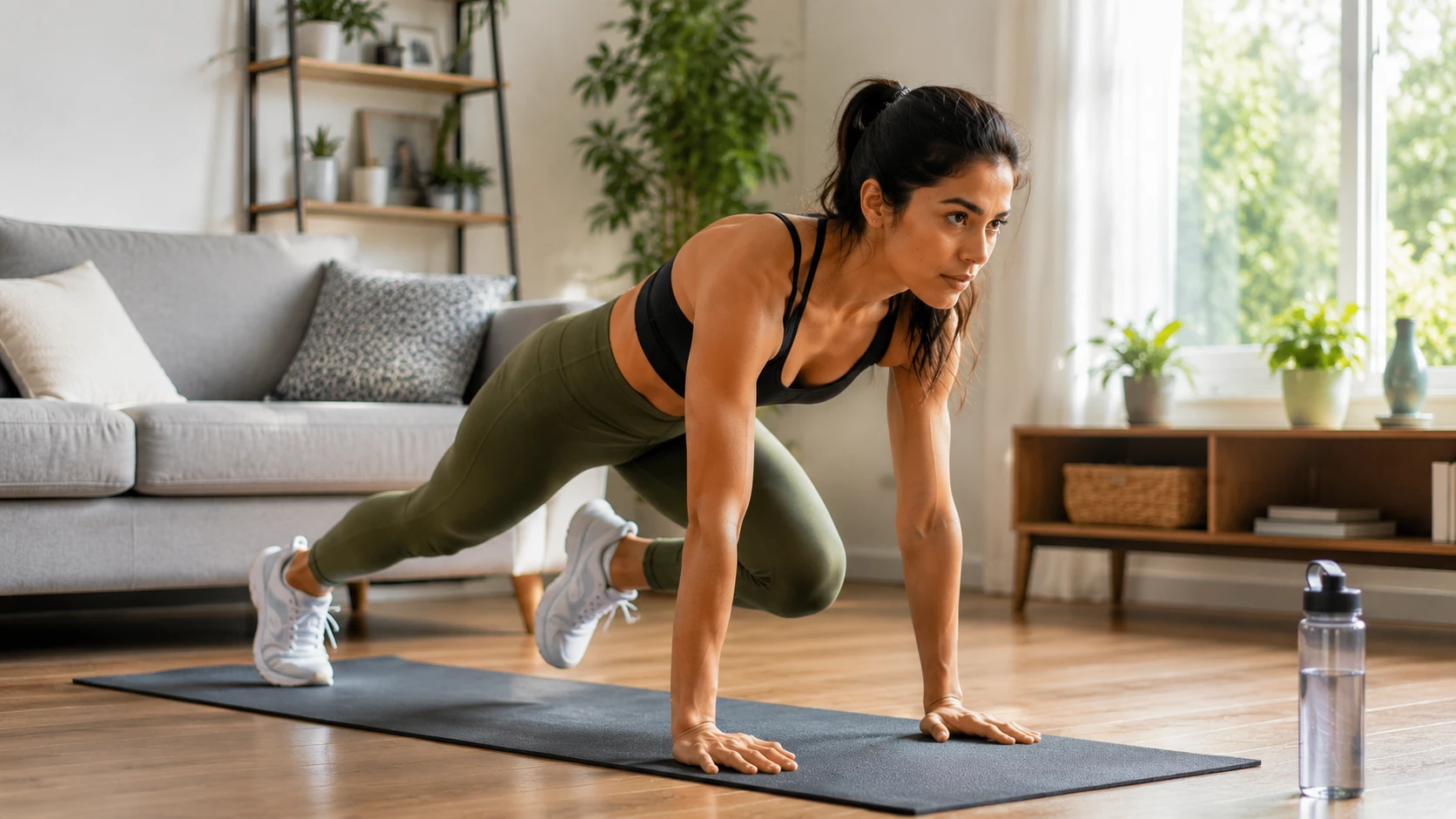
Why Home Workouts Work
Home workouts save you money, time, and a whole lot of excuses — no commute, no waiting for machines, no crowds. You can work out in your pajamas, play your music as loud as you want, and go at your own pace. Once you start seeing results — more energy, better sleep, stronger muscles — it becomes addictive in the best way.
Always Warm Up First
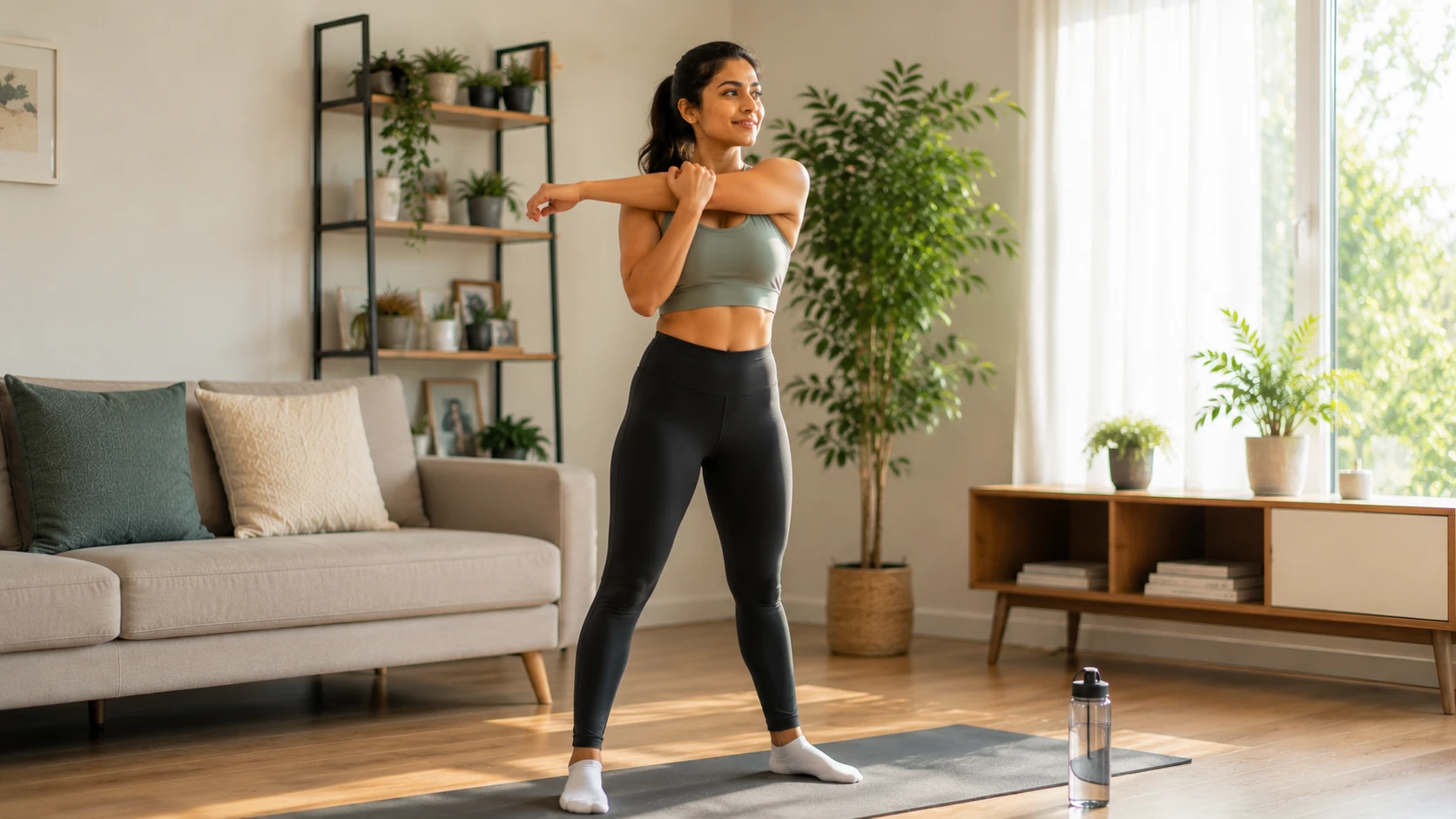
Before jumping in, take 5–10 minutes to warm up: arm circles, shoulder rolls, gentle leg swings, or marching in place. Get your joints loose and your blood flowing — your future self will thank you. The moves below are split into three levels; start wherever feels comfortable and mix and match.
Beginner Moves (1–10)
| Move | How to Do It |
|---|---|
| 1. Jumping Jacks | Jump feet wide, clap overhead, return. 30–60 sec. |
| 2. Wall Sit | Slide down a wall to a seated position. Hold 20–40 sec. |
| 3. Bodyweight Squat | Push hips back like sitting, then stand tall. |
| 4. Calf Raises | Lift heels off the floor, pause, lower slowly. |
| 5. Modified Push-Up | From your knees, lower chest and push back up. |
| 6. Step-Ups | Step up onto a sturdy step, alternate legs. |
| 7. Glute Bridge | Lie down, lift hips, squeeze glutes, lower. |
| 8. Knee Plank | Forearms and knees down, straight back. Hold 20–30 sec. |
| 9. Side Leg Raises | Lift one leg out to the side, lower, switch. |
| 10. Arm Circles | Extend arms, make small to big circles, both directions. |
Intermediate Moves (11–20)
| Move | How to Do It |
|---|---|
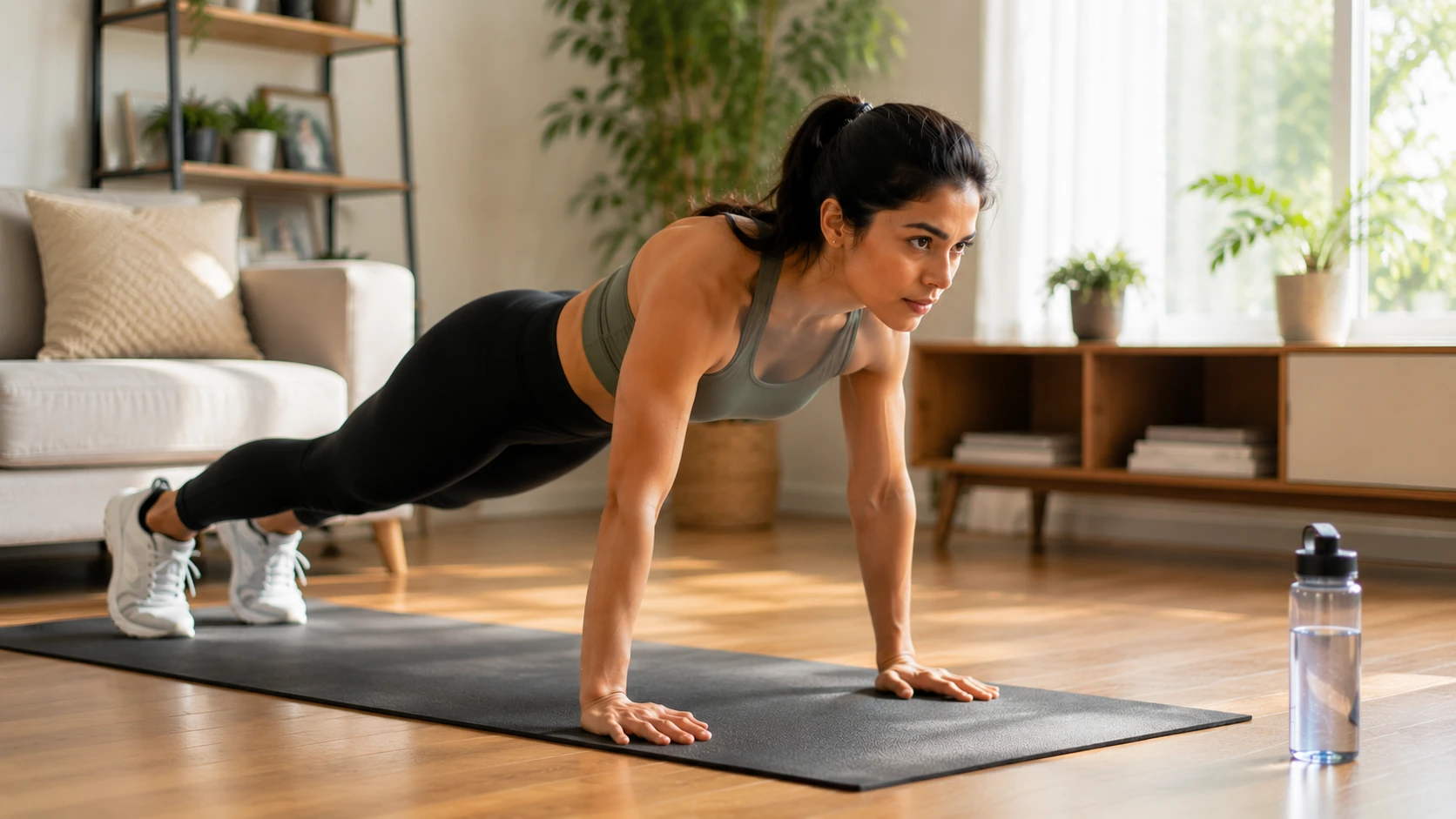
| 11. Standard Push-Up | Body straight, lower to 90°, push back up. |
| 12. Mountain Climbers | Push-up position, drive knees to chest quickly. |
| 13. Reverse Lunge | Step back, bend both knees to 90°, alternate. |
| 14. Triceps Dips | Hands on a chair edge, bend elbows, push up. |
| 15. High Knees | Jog in place, lifting knees as high as possible. |
| 16. Side Plank | On one forearm, lift hips straight. Hold per side. |
| 17. Squat Pulse | Stay low in a squat and pulse up and down. |
| 18. Superman | Lie face down, lift arms and legs together, hold. |
| 19. Bicycle Crunch | Opposite elbow to opposite knee, pedaling motion. |
| 20. Single-Leg Deadlift | Hinge forward on one leg, extend the other back. |
Advanced Moves (21–30)
| Move | How to Do It |
|---|---|
| 21. Burpee | Squat, kick back, push-up, jump up explosively. |
| 22. Plyometric Push-Up | Push up hard enough for hands to leave the floor. |
| 23. Pistol Squat | One-leg squat; hold support if needed. |
| 24. Jump Squat | Squat, then explode up into a jump; land soft. |
| 25. Decline Push-Up | Feet elevated on a chair, perform a push-up. |
| 26. Plank to Push-Up | Move from forearm plank to full push-up and back. |
| 27. Skater Jump | Leap side to side like a speed skater. |
| 28. Tuck Jump | Jump up, tuck knees to chest, land softly. |
| 29. Wall Handstand Hold | Kick up against a wall, hold for shoulder strength. |
| 30. Plank Jacks | In plank, jump feet apart and together. |
Cool Down
Never skip the cool-down. Stretch out tight muscles, lower your heart rate, and calm your mind. Do gentle stretches for hamstrings, quads, hips, back, and shoulders, then finish lying flat with slow, deep breaths.
A Few Real-World Tips
- Form over reps — good form protects you and gets faster results.
- Stay hydrated before, during, and after.
- Modify when needed — swap any move that feels too hard or painful.
- Rest is part of training — muscles rebuild when you sleep and recover.
- Fuel your workouts — pair movement with a balanced diet for the best results.
Frequently Asked Questions
How many sets should I do?
Beginners: 1–2 sets per move. As you get stronger, build up to 3–4 sets.
Do I really need equipment?
No — just your body and a little space. A chair, step, or wall can make moves easier or harder.
Can I change the exercises?
Yes — swap any move for another at the same level. Make it work for you.
How often should I work out at home?
A short, consistent routine most days beats an occasional long session.
Final Thoughts
You don’t need a fancy gym or shiny machines to get fit and feel strong. Start where you are, use what you have, and do what you can.
One day you’ll catch yourself doing push-ups you once thought were impossible — and you’ll be glad you ditched the excuses and moved anyway. Stay active, stay healthy, and have fun with it.
Sources & References
1. Piercy KL, et al. The Physical Activity Guidelines for Americans. JAMA. 2018;320(19):2020–2028.
→ pubmed.ncbi.nlm.nih.gov/30418471
2. CDC. Physical Activity Basics. Centers for Disease Control and Prevention.
3. U.S. Department of Health. Physical Activity Guidelines for Americans, 2nd edition. 2018.
→ health.gov/physical-activity-guidelines
4. ACE. Bodyweight Training: Benefits and Exercises. American Council on Exercise.