
Table of Contents
ToggleImmunity-Boosting Foods and Hydration: Eat to Support Your Defenses
Key takeaways
- No single food is a magic shield, but an overall nutrient-rich diet helps support a healthy immune system.
- Key nutrients include vitamin C, vitamin D, zinc, and antioxidants from colorful produce..
- A healthy gut and good hydration are both closely tied to immune function..
- Sleep, movement, and stress management matter just as much as what's on your plate.
When cold and flu season rolls around, everyone wants to know the same thing: what can I eat to stay healthy? While no food can guarantee you’ll never get sick, the science is clear that a nutrient-rich diet, good hydration, and healthy habits all help your immune system do its job.
This guide breaks down the foods and nutrients most associated with immune support — plus the lifestyle basics that matter just as much. It builds directly on our balanced diet guide.
Can Food Really Support Your Immune System?
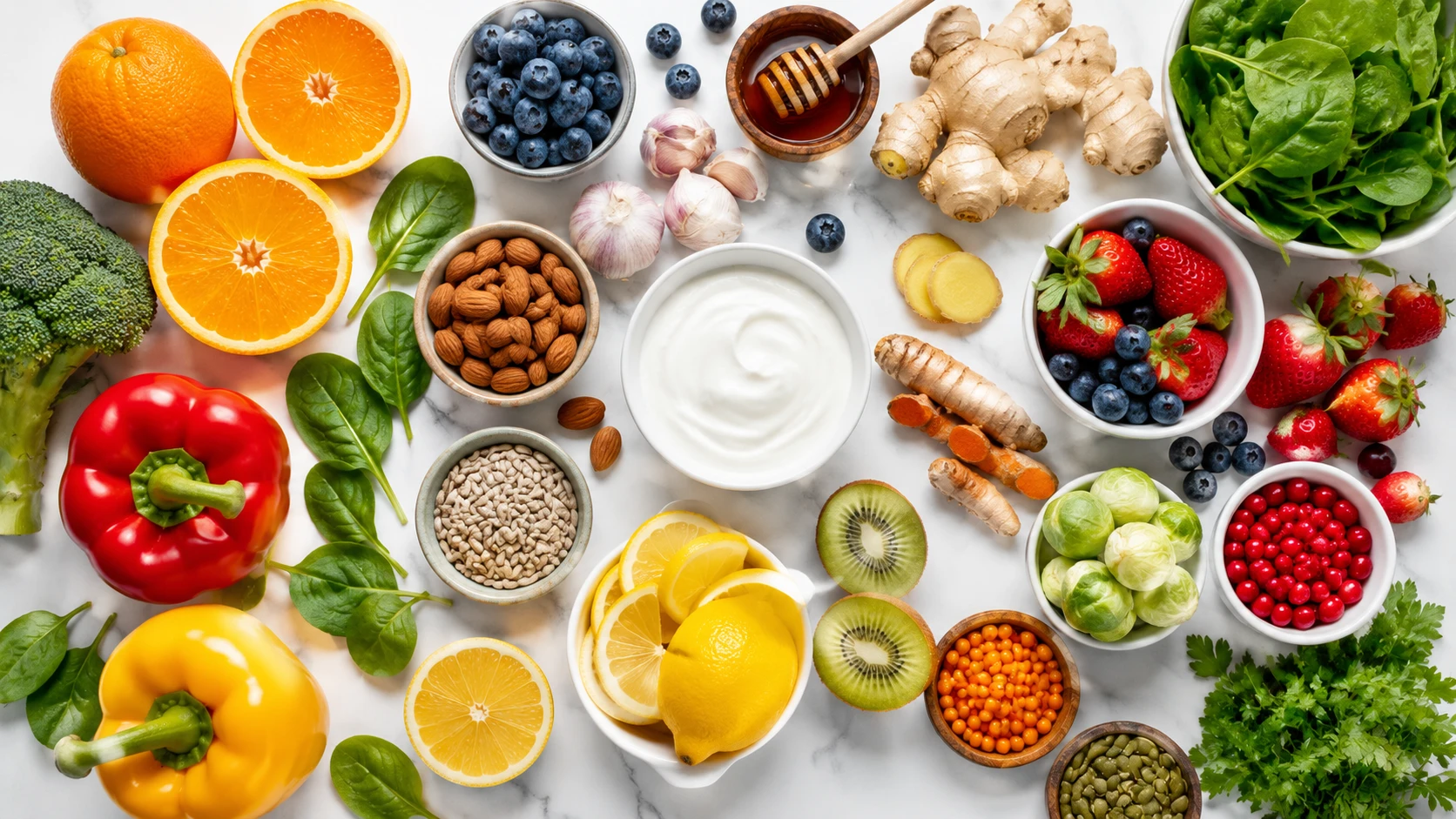
Here’s the honest answer: no single food or supplement “boosts” immunity overnight, and you should be skeptical of anything that promises that. But your immune system relies on a steady supply of nutrients to function well, and deficiencies can weaken your defenses. So the real goal isn’t a magic food — it’s a consistently varied, nutrient-rich diet that gives your body what it needs.
Key Nutrients for Immune Support
| Nutrient | Why It Helps | Food Sources |
|---|---|---|
| Vitamin C | Supports immune cell function | Citrus, bell peppers, strawberries |
| Vitamin D | Helps regulate immune response | Fatty fish, eggs, fortified foods, sunlight |
| Zinc | Supports immune cell development | Lean meat, beans, nuts, seeds |
| Antioxidants | Help protect cells from damage | Berries, leafy greens, colorful veggies |
| Probiotics | Support gut-linked immunity | Yogurt, kefir, sauerkraut, kimchi |
Top Immunity-Supporting Foods
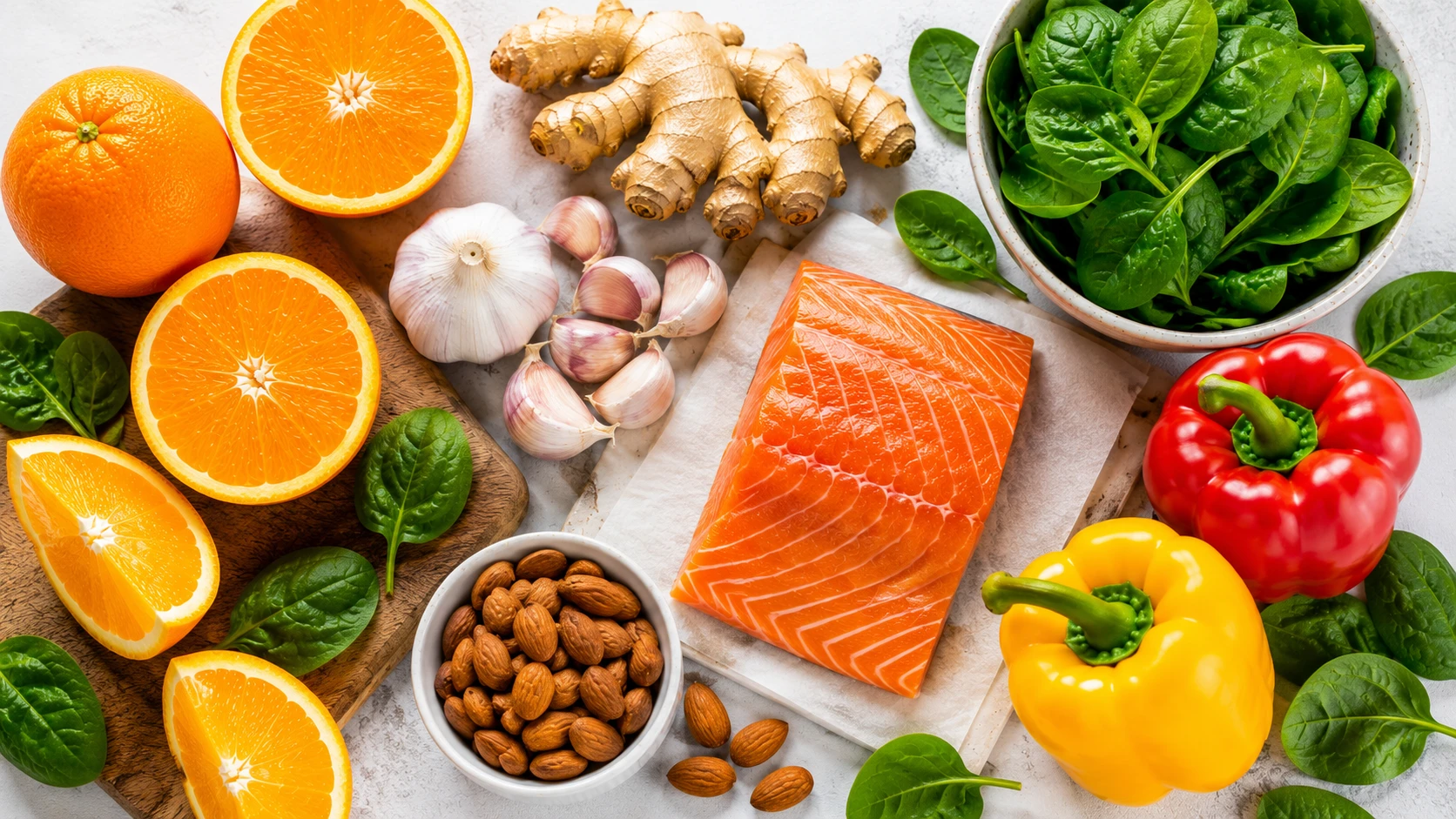
- Citrus fruits & berries — rich in vitamin C and antioxidants
- Bell peppers — surprisingly high in vitamin C
- Leafy greens (spinach, kale) — vitamins, folate, antioxidants
- Garlic & ginger — long used for their supportive compounds
- Nuts & seeds — vitamin E, zinc, and healthy fats
- Fatty fish (salmon) — vitamin D and omega-3s
- Fermented foods (yogurt, kefir) — support the gut, see our best probiotic foods guide
No need to overthink it — variety across the week covers most of your bases.
The Gut–Immunity Connection
A large share of your immune system is closely linked to your gut, so gut health and immunity go hand in hand. Fiber-rich and fermented foods feed beneficial bacteria, which in turn support balanced immune function. To go deeper, read our complete gut health guide.
Why Hydration Matters for Immunity
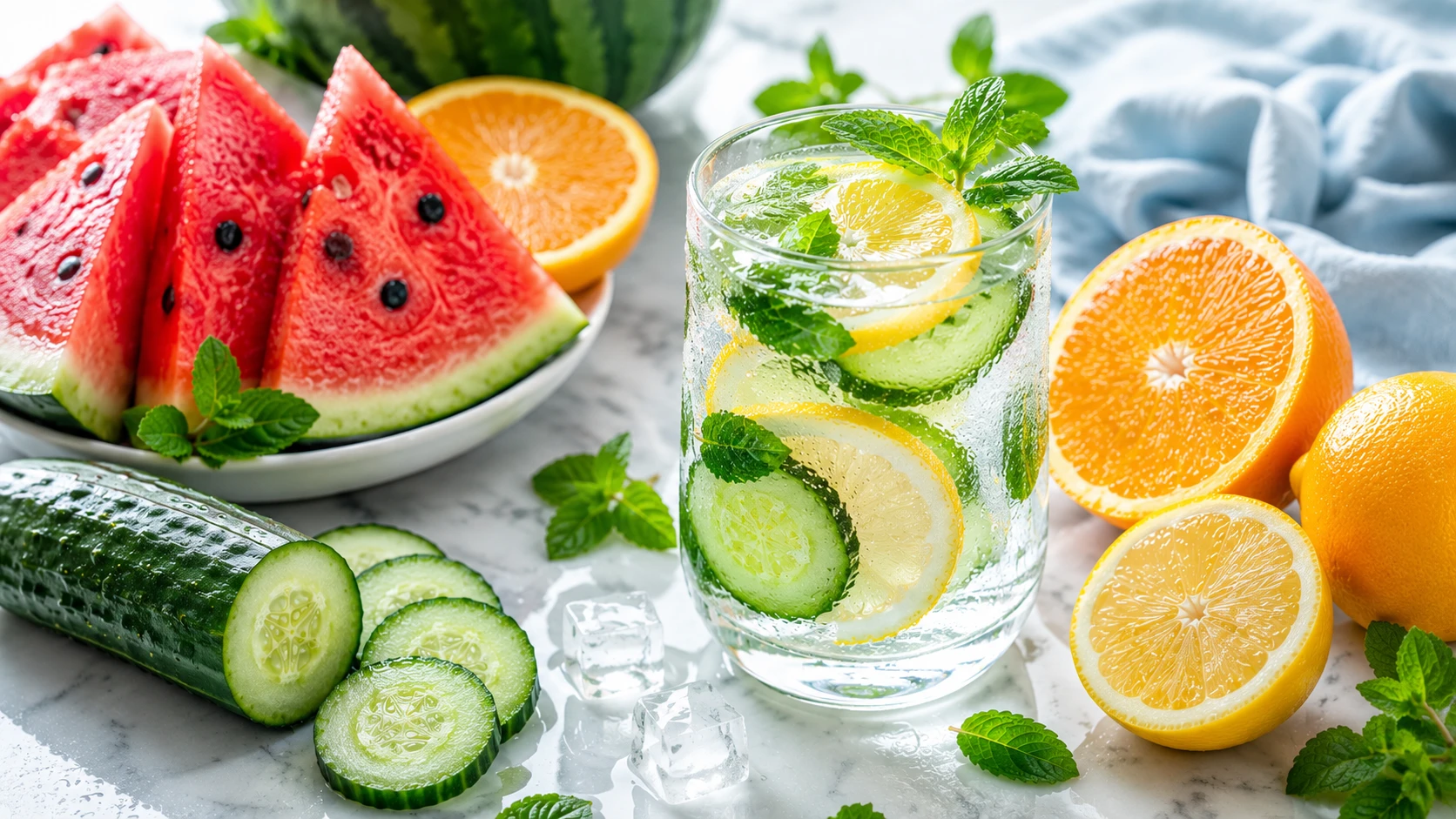
Water often gets overlooked, but it’s essential. Proper hydration helps transport nutrients, supports the body’s natural waste removal, and keeps your system running smoothly — all of which support immune health. Aim for around 8 cups a day, more if you’re active or it’s hot. Herbal teas and water-rich fruits and vegetables (cucumber, oranges, watermelon) count too.
Beyond Food: Habits That Support Immunity
Diet is only part of the picture. These matter just as much:
- Sleep — your body repairs and regulates immunity while you rest (see healthy sleep habits).
- Movement — regular activity supports overall health.
- Stress management — chronic stress can wear down your defenses (see how to reduce stress naturally).
- Limit excess — too much alcohol, sugar, and ultra-processed food can work against you.
What to Be Skeptical Of
Be wary of products or articles promising to “supercharge” or “cure” with one ingredient, mega-doses, or detox teas. More isn’t always better — excessive supplements can even be harmful. A balanced diet and healthy habits are far more effective (and safer) than any quick fix. When in doubt, ask a healthcare professional.
Frequently Asked Questions
What foods help support the immune system?
Colorful fruits and vegetables, citrus, leafy greens, nuts, seeds, fatty fish, and fermented foods.
Does vitamin C prevent colds?
It supports immune function, but evidence doesn’t show it reliably prevents colds — a varied diet matters most.
Can drinking water improve immunity?
Staying hydrated supports overall body functions that immunity depends on, so it’s an important basic.
Are supplements necessary?
For most people eating a balanced diet, food comes first — talk to a doctor before adding supplements.
Final Thoughts
There’s no single magic food for immunity — but there is a reliable formula: eat a varied, colorful, nutrient-rich diet, support your gut, stay hydrated, sleep well, move regularly, and manage stress. Do those consistently, and you give your immune system the steady support it needs to do its job. Keep it simple, keep it balanced, and be skeptical of anything that promises a shortcut.
Sources & References
- Harvard T.H. Chan School of Public Health. Nutrition and Immunity. — hsph.harvard.edu
- NIH. Vitamin C, Vitamin D, and Zinc — Fact Sheets. Office of Dietary Supplements. — ods.od.nih.gov
- Childs CE, et al. Diet and Immune Function. Nutrients. 2019;11(8):1933. — pubmed.ncbi.nlm.nih.gov/31426423
- CDC. Water and Healthier Drinks. — cdc.gov/healthyweight