
Table of Contents
ToggleHow to Reduce Stress Naturally: Science-Backed Habits That Actually Work
Key takeaways
- Chronic stress affects sleep, mood, digestion, and immunity — managing it is a whole-body win.
- Simple, free tools work: slow breathing, daily movement, sunlight, and quality sleep.
- What you eat matters too — balanced nutrition and a healthy gut support a calmer mind.
- If stress feels constant or overwhelming, reaching out to a professional is a smart, healthy step.
Stress is a normal part of life — a little of it even helps you focus and perform. But when stress becomes constant, it stops being helpful and starts wearing you down: poor sleep, low mood, tension headaches, digestive issues, and burnout.
The good news? You don’t need expensive programs to manage it. Many of the most effective stress-relief tools are simple, free, and backed by research. This guide walks through natural, practical ways to lower stress and feel more in control — starting today. Stress is also deeply tied to your mood chemistry, so it pairs well with our guide on how to increase happy hormones.
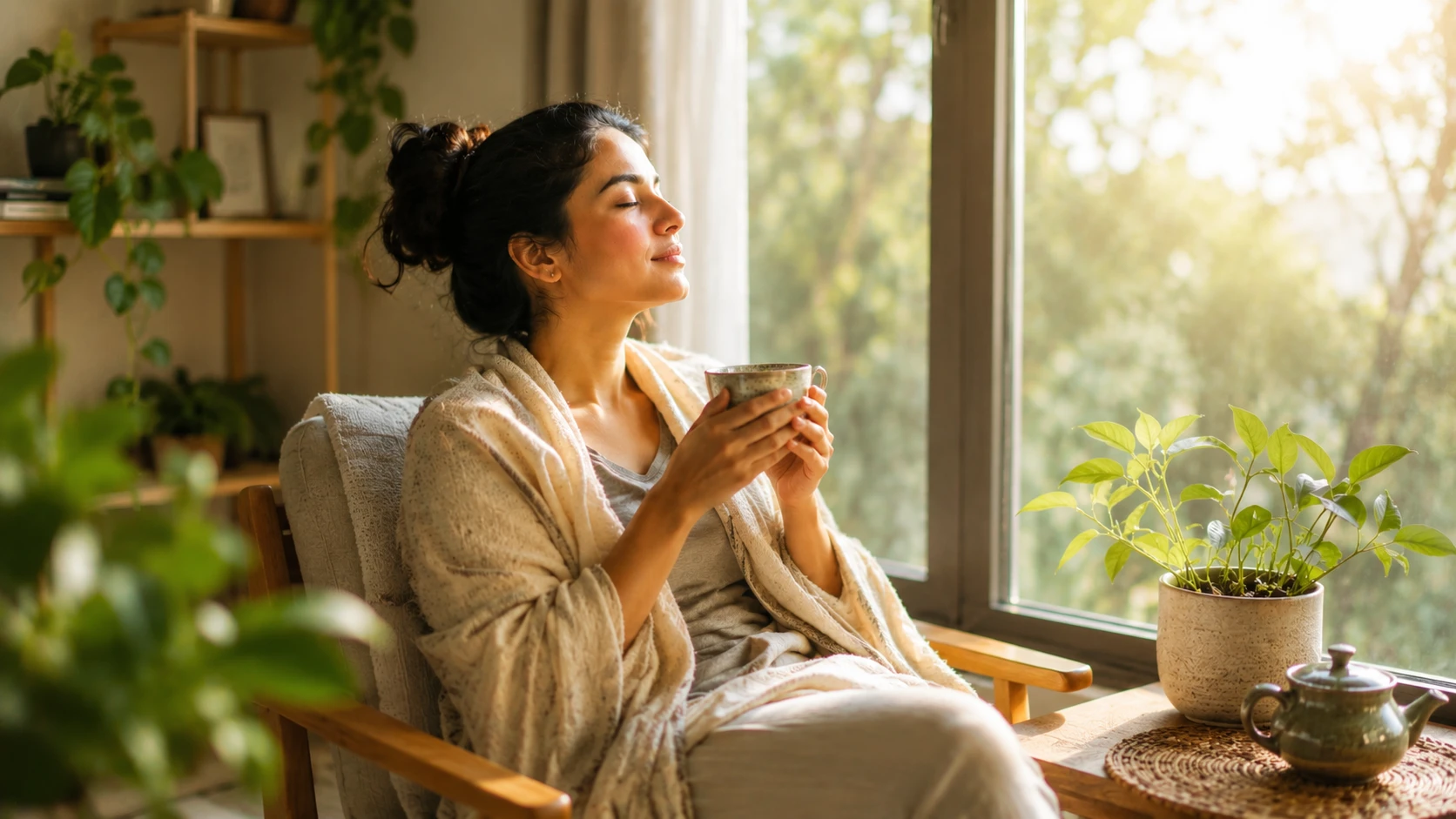
What Happens to Your Body Under Stress
When you feel stressed, your body releases hormones like cortisol and adrenaline — the “fight-or-flight” response. In short bursts that’s useful. But when it’s switched on too often, chronic stress can contribute to:
- Trouble sleeping and constant fatigue
- Tension, headaches, and muscle tightness
- Digestive problems (the gut is highly sensitive to stress)
- Low mood, irritability, and difficulty focusing
Understanding this helps explain why the habits below work — they calm that response and bring your body back to balance.
Quick Stress-Relief Techniques (Start Today)
| Technique | How to Do It | Time |
|---|---|---|
| Box breathing | Inhale 4s, hold 4s, exhale 4s, hold 4s | 2 min |
| Go outside | Step into sunlight and fresh air | 5 min |
| Quick walk | A brisk stroll to reset your mind | 10 min |
| Digital break | Put your phone away, screen-free | 15 min |
| Stretch | Loosen neck, shoulders, and back | 3 min |
1. Breathe Slowly and Deeply
Slow, deep breathing is one of the fastest ways to calm your nervous system.
Techniques like box breathing or simply making your exhale longer than your inhale signal your body that it’s safe to relax.
Do it for just a couple of minutes when you feel tension rising — it works almost anywhere, anytime.
2. Move Your Body

Physical activity is a proven stress reliever — it lowers stress hormones and releases endorphins, your body’s natural mood lifters. You don’t need an intense workout; a daily walk, gentle yoga, or a short home session is enough. For easy ideas, try our at-home workout moves.
3. Prioritize Quality Sleep
Stress and sleep feed each other — poor sleep raises stress, and stress wrecks sleep. Break the cycle with a consistent bedtime, a screen-free wind-down, and a cool, dark room. Even small improvements in sleep can dramatically lower how stressed you feel.
4. Eat to Support a Calmer Mind
What you eat affects how you feel. Steady blood sugar, balanced meals, and a healthy gut all support a calmer mood:
- Limit excess caffeine, sugar, and alcohol, which can amplify anxiety.
- Eat regular, balanced meals (see our balanced diet guide).
- Support your gut — it’s closely tied to mood through the gut–brain axis. Learn more in how stress affects gut health.
5. Practice Mindfulness or Meditation
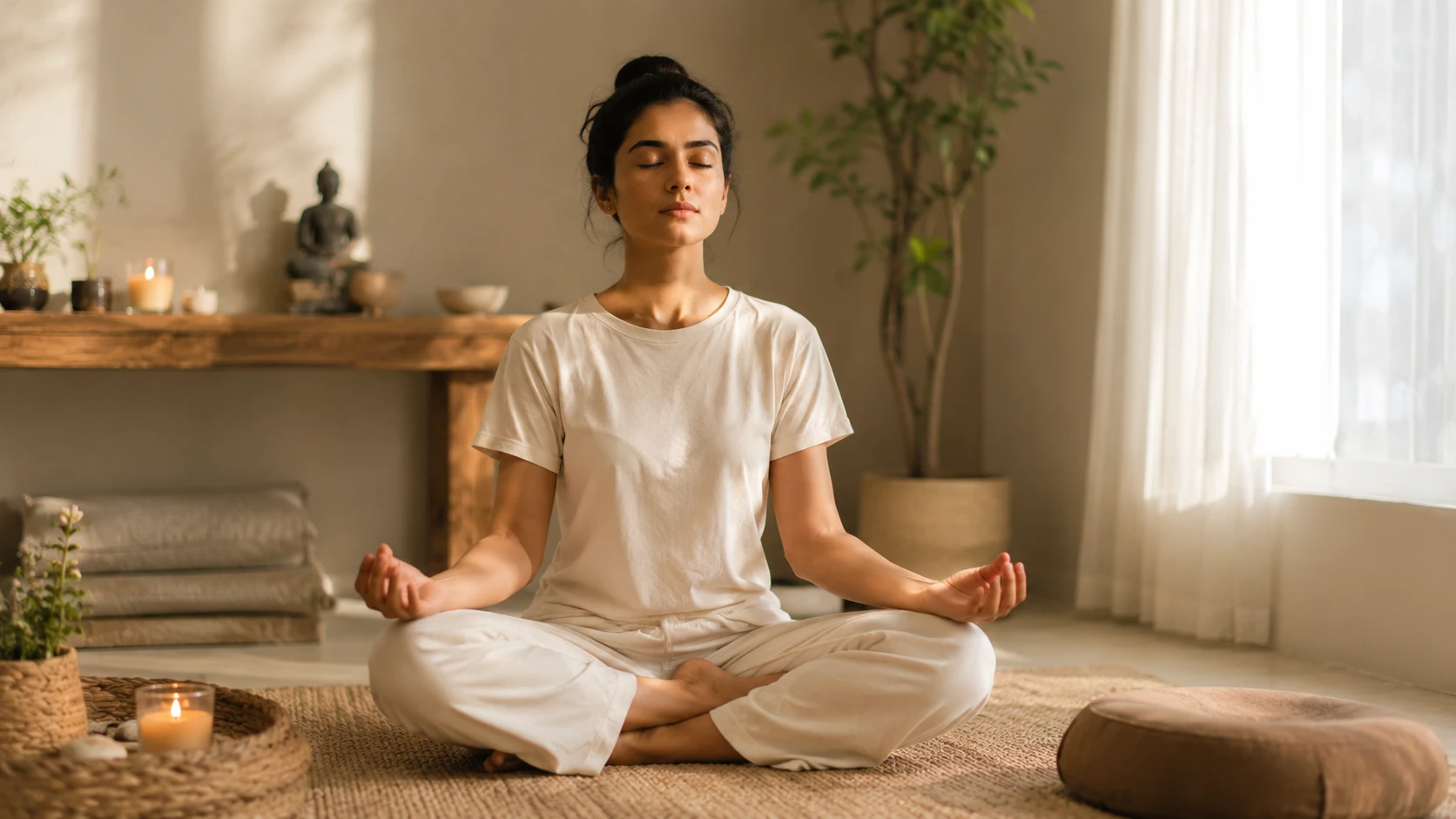
Mindfulness simply means paying attention to the present moment without judgment. Even five minutes a day — focusing on your breath, a short guided meditation, or a quiet cup of tea without your phone — can reduce stress over time. Consistency matters more than duration.
6. Connect With People
Social connection is a powerful buffer against stress. Talking to a friend, spending time with family, or simply sharing how you feel can ease the load. You don’t have to carry everything alone — reaching out is a strength, not a weakness.
7. Set Boundaries and Simplify
A lot of stress comes from taking on too much. Practice saying no, break big tasks into small steps, and protect time for rest. Reducing the inputs that drain you is just as important as adding calming habits.
8. When to Seek Extra Support
Natural habits help most everyday stress — but sometimes you need more, and that’s okay. If stress feels constant, overwhelming, or starts affecting your sleep, relationships, or daily life, please reach out to a doctor or mental-health professional. Getting support early makes a real difference, and asking for help is a healthy, smart step.
Frequently Asked Questions
What is the fastest way to reduce stress?
Slow, deep breathing for a couple of minutes calms your nervous system almost immediately.
Can exercise really lower stress?
Yes — even a short daily walk lowers stress hormones and boosts mood-lifting endorphins.
Does diet affect stress?
It can — balanced meals, less excess caffeine and sugar, and a healthy gut all support a calmer mind.
How long until natural methods work?
Some techniques help instantly; lasting change usually comes from consistent daily habits over a few weeks.
Final Thoughts
You can’t eliminate stress entirely — but you can change how it affects you. Build a few simple habits into your day: breathe slowly, move your body, sleep well, eat balanced meals, and stay connected.
Small, consistent steps add up to a calmer, more resilient you. And if it ever feels like too much, don’t hesitate to reach out for support.
Sources & References
- American Psychological Association. Stress effects on the body. — apa.org/topics/stress
- Harvard Health. Relaxation techniques: Breath control. — health.harvard.edu
- NIH. 5 Things You Should Know About Stress. NIMH. — nimh.nih.gov
- Mayo Clinic. Exercise and stress: Get moving to manage stress. — mayoclinic.org