
Table of Contents
ToggleBest Probiotic Foods for Gut Health: Top Sources to Add Today
Key takeaways
- Probiotic foods add beneficial live bacteria that support digestion, immunity, and the gut–brain connection.
- Top sources include yogurt, kefir, sauerkraut, kimchi, miso, tempeh, and kombucha.
- Pair probiotics with prebiotic fiber (garlic, onions, oats, bananas) to help them thrive.
- Choose "live and active cultures" or naturally fermented versions for real benefit.
Your gut is home to trillions of bacteria — and keeping the good ones thriving is one of the simplest ways to support your overall health. One of the easiest, most natural ways to do that is through probiotic foods.
Probiotics are live, beneficial microorganisms that support digestion, immunity, and even mood. In this guide, you’ll find the best probiotic foods to add to your diet, how they work, and simple ways to enjoy them every day. For the foundations, start with our complete gut health guide.
What Are Probiotics?
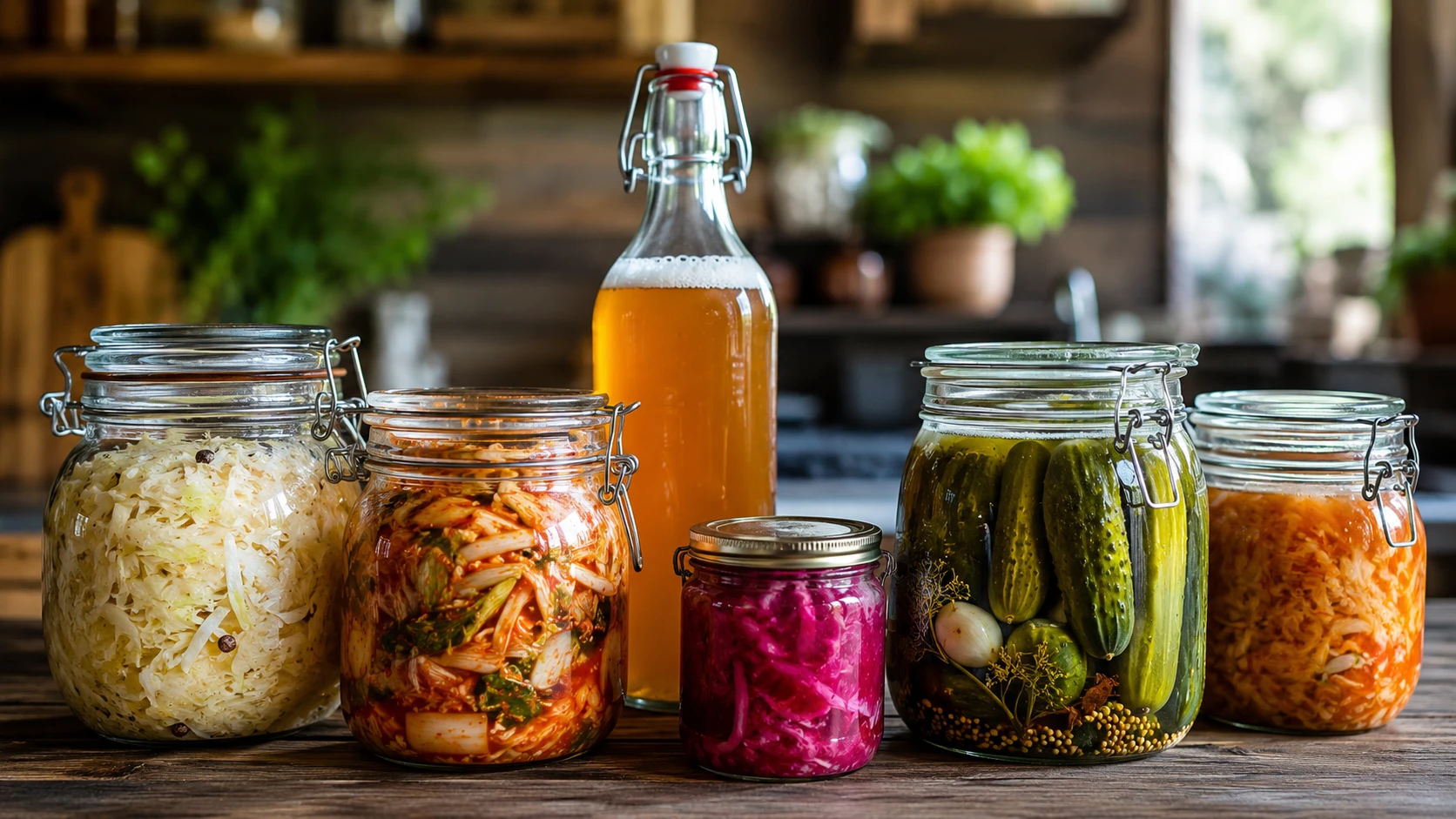
Probiotics are live beneficial bacteria and yeasts that support a healthy balance in your gut microbiome. They occur naturally in fermented foods, where helpful microorganisms break down sugars and create that signature tangy flavor.
A balanced gut supports smoother digestion, a stronger immune response, and even mood — thanks to the gut–brain connection (more on that in how stress affects gut health).
How Probiotic Foods Help Your Gut
- Improve digestion — they help break down food and ease bloating.
- Support immunity — a large share of immune activity is linked to the gut.
- Boost microbial diversity — more variety of good bacteria is a marker of gut health.
- Aid the gut–brain axis — a balanced gut is associated with steadier mood.
The Best Probiotic Foods
| Food | What It Is | Tip |
|---|---|---|
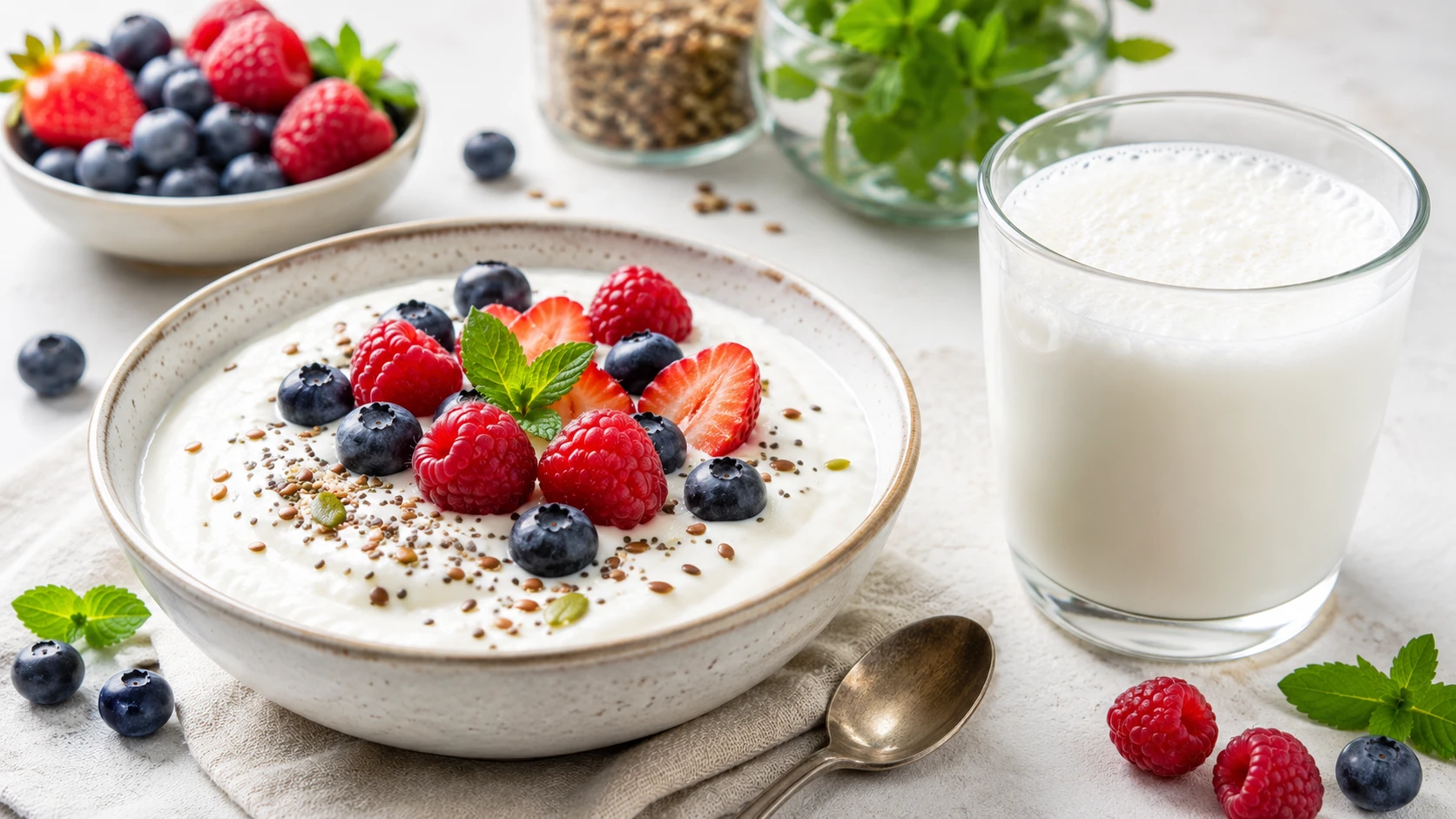
| Yogurt | Fermented milk | Look for "live & active cultures" |
| Kefir | Fermented milk drink | More diverse strains than yogurt |
| Sauerkraut | Fermented cabbage | Choose unpasteurized, refrigerated |
| Kimchi | Fermented vegetables | Adds spice and live cultures |
| Miso | Fermented soybean paste | Add after cooking, not while boiling |
| Tempeh | Fermented soybeans | High-protein meat alternative |
| Kombucha | Fermented tea | Watch for added sugar |
| Pickles | Brine-fermented cucumbers | Only naturally fermented (not vinegar) |
Probiotics vs Prebiotics: What's the Difference?
They sound alike but do different jobs — and they work as a team.
| Probiotics | Prebiotics |
|---|---|
| The good bacteria themselves | The fiber that feeds the good bacteria |
| Yogurt, kefir, kimchi, miso | Garlic, onions, oats, bananas |
Eating both together gives the best results — the probiotics arrive, and the prebiotics help them thrive.
Easy Ways to Add Probiotics to Your Day
- Have yogurt or kefir with breakfast or as a snack.
- Add a spoonful of sauerkraut or kimchi as a side.
- Use miso in dressings or soups (stir in after cooking).
- Swap a soda for a low-sugar kombucha.
- Add tempeh to stir-fries and grain bowls.
A varied, fiber-rich diet supports all of this — see our balanced diet guide.
Tips for Choosing the Best Probiotic Foods
- Look for “live and active cultures” on labels.
- Choose refrigerated, unpasteurized ferments (heat kills the bacteria).
- Avoid versions loaded with added sugar.
- For pickles, pick naturally fermented (in salt brine), not vinegar-based.
Who Should Be Cautious
Probiotic foods are safe for most people, but introduce them slowly to avoid temporary bloating or gas. Those who are immunocompromised or have specific medical conditions should check with a doctor before adding large amounts of fermented foods.
Frequently Asked Questions
What are the best probiotic foods?
Yogurt, kefir, sauerkraut, kimchi, miso, tempeh, and kombucha are among the top sources.
How often should I eat probiotic foods?
A small serving most days is a good goal — consistency matters more than large amounts.
Are probiotic supplements better than food?
Whole fermented foods also provide nutrients and fiber; many people prefer food first and use supplements only if advised.
Can probiotics help with bloating?
For many people, yes — though it can take a few weeks of consistent intake to notice changes.
Final Thoughts
Probiotic foods are one of the easiest, most natural ways to support a healthy gut. Add a variety of fermented foods, pair them with prebiotic fiber, and stay consistent — your digestion, immunity, and overall well-being will thank you. Start small, find the ones you enjoy, and make them a regular part of your plate.
Sources & References
- Hill C, et al. The ISAPP consensus statement on probiotics. Nat Rev Gastroenterol Hepatol. 2014. — pubmed.ncbi.nlm.nih.gov/24912386
- NIH. Probiotics: What You Need To Know. NCCIH. — nccih.nih.gov/health/probiotics
- Harvard Health. How to get more probiotics. — health.harvard.edu
- Marco ML, et al. Health benefits of fermented foods. Curr Opin Biotechnol. 2017. — pubmed.ncbi.nlm.nih.gov/27998788