
Table of Contents
ToggleWhat Foods to Eat Every Day to Be Healthy
Key takeaways
- Build daily meals around whole foods: fruits, vegetables, lean protein, whole grains, and healthy fats.
- Variety and consistency matter far more than chasing trendy "superfoods."
- Aim for about 5 servings of produce, a palm of protein per meal, and plenty of water each day.
- Cut back on sodas, ultra-processed snacks, fried food, and processed meats.
Thinking about what to eat every day sounds simple — until you open social media and every trend contradicts the last one. One minute it’s keto, the next it’s plant-based, and you’re left scratching your head.
Here’s the truth: eating healthy doesn’t have to be complicated. Strip away the hype and experts keep saying the same thing — build your daily meals around whole, nourishing foods. That’s it.
This guide breaks down exactly which foods deserve a spot on your plate every day, why they’re good for you, and how to fit them into a busy life. For the full picture of how these foods fit together, see our pillar on building a balanced daily diet.
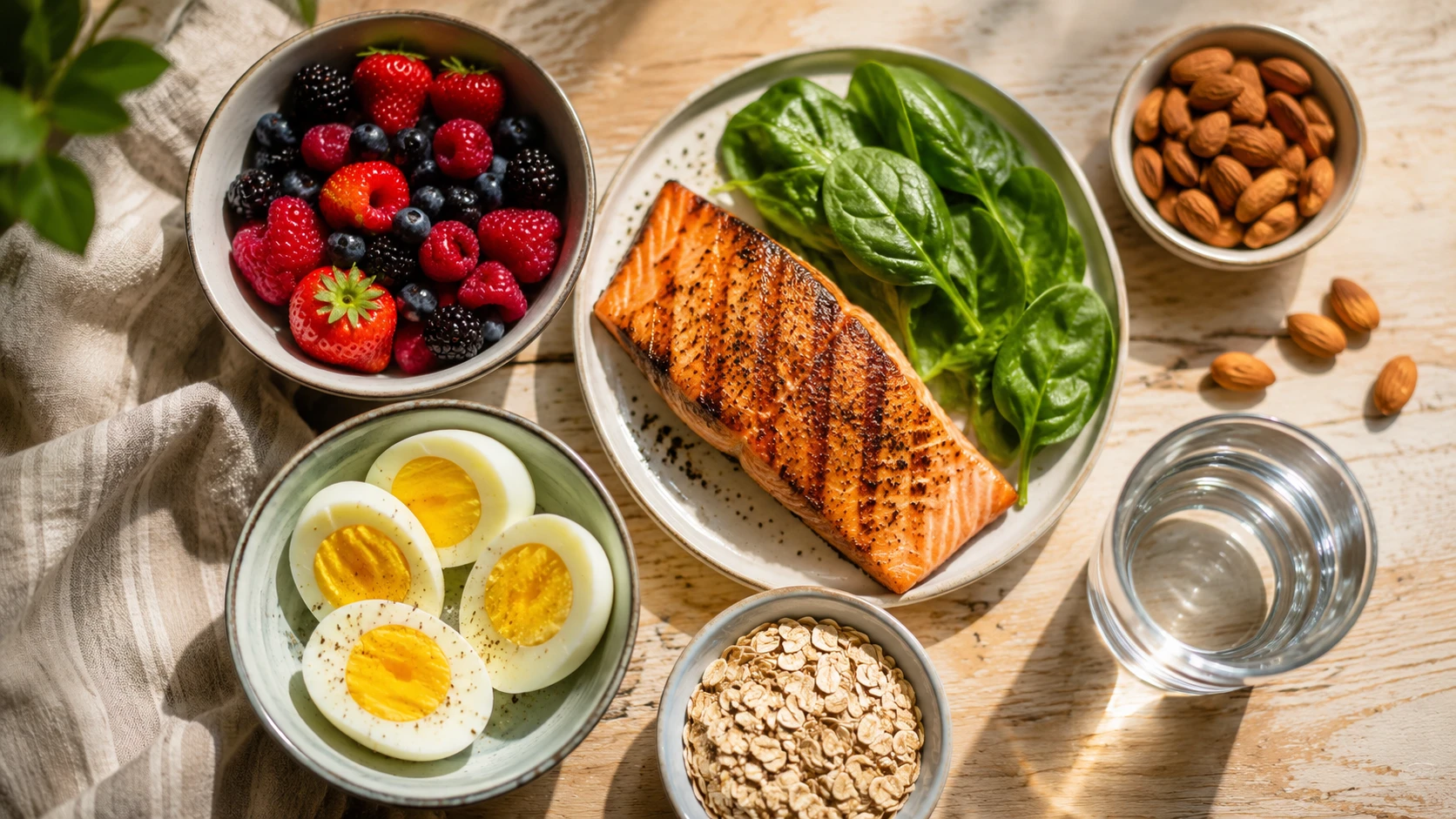
The Core of a Healthy Daily Diet
Before any food list, five simple principles guide everything:
- Variety — your body loves a mix of nutrients, so don’t eat the same three foods.
- Minimally processed — closer to nature is better for you.
- Balance — some carbs, some protein, some healthy fats.
- Portion awareness — even good food can be overdone.
- Hydration — water is easy to forget but essential.
Keep these in mind and you’re already ahead.
What to Eat Every Day (Quick Reference)
| Food Group | Daily Target | Examples |
|---|---|---|
| Fruits & Vegetables | ~5 servings | Berries, spinach, broccoli, carrots |
| Lean Protein | Palm-sized per meal | Chicken, fish, eggs, lentils, yogurt |
| Whole Grains | 2–3 servings | Oats, brown rice, quinoa |
| Healthy Fats | Small amounts | Olive oil, nuts, avocado, salmon |
| Water | 8+ cups | Water, herbal tea, infused water |
Fruits and Vegetables: Your Everyday Powerhouse
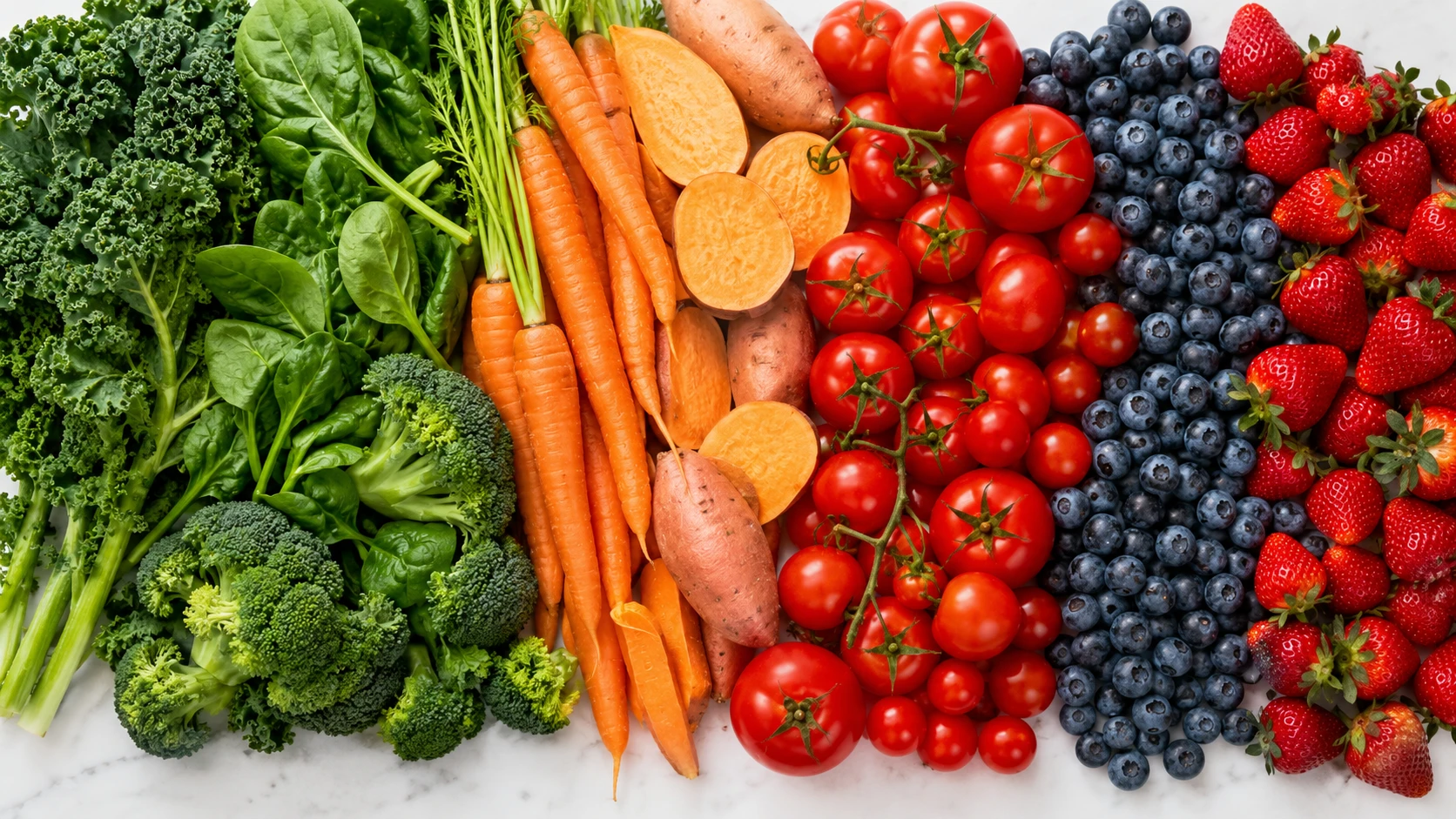
If there’s one group you should never skip, it’s this. Fruits and vegetables are loaded with vitamins, minerals, antioxidants, and fiber. Colors matter — each brings its own benefits:
- Greens (kale, broccoli, spinach) — iron, folate, calcium
- Orange/yellow (carrots, sweet potatoes) — vitamin A and beta-carotene
- Reds/purples (berries, tomatoes) — antioxidants like lycopene
Aim for about five servings a day. Fresh, frozen, or lightly steamed — whatever works.
Lean Proteins: Your Daily Repair Crew
Protein fixes cells, builds muscle, balances hormones, and keeps you full longer. Daily go-tos: chicken or turkey breast, fish like salmon or sardines, eggs, lentils and beans, low-fat Greek yogurt, tofu and tempeh. For most people, a palm-sized portion per meal is about right.
Healthy Fats: Don't Fear Them
We need healthy fats for vitamin absorption, brain health, hormones, and fighting inflammation. Include some every day: extra-virgin olive oil, nuts and seeds, avocados, and fatty fish (omega-3 gold). Just keep portions in check — a small handful of nuts or a drizzle of olive oil is enough.
Whole Grains: The Energy Builders
Whole grains give steady energy and fiber — no sugar-spike rollercoaster — and feed your good gut bacteria. Think oats, brown rice, quinoa, and whole-grain bread or pasta. New to them? Mix half-and-half with what you normally eat until you adjust.
Hydration: Don't Ignore This
Water is the hidden superfood. Staying hydrated supports mood, focus, digestion, and energy. Aim for at least 8 cups a day, more if you’re active or it’s hot. Herbal teas and fruit-infused water count too.
Foods to Cut Back On
No one’s perfect, but these shouldn’t be daily habits:
- Sugary sodas and energy drinks
- Ultra-processed packaged snacks
- Deep-fried fast food
- Processed meats
- Trans fats in some margarines and baked goods
A treat now and then is fine — just don’t build your daily diet on them.
A No-Stress Sample Day
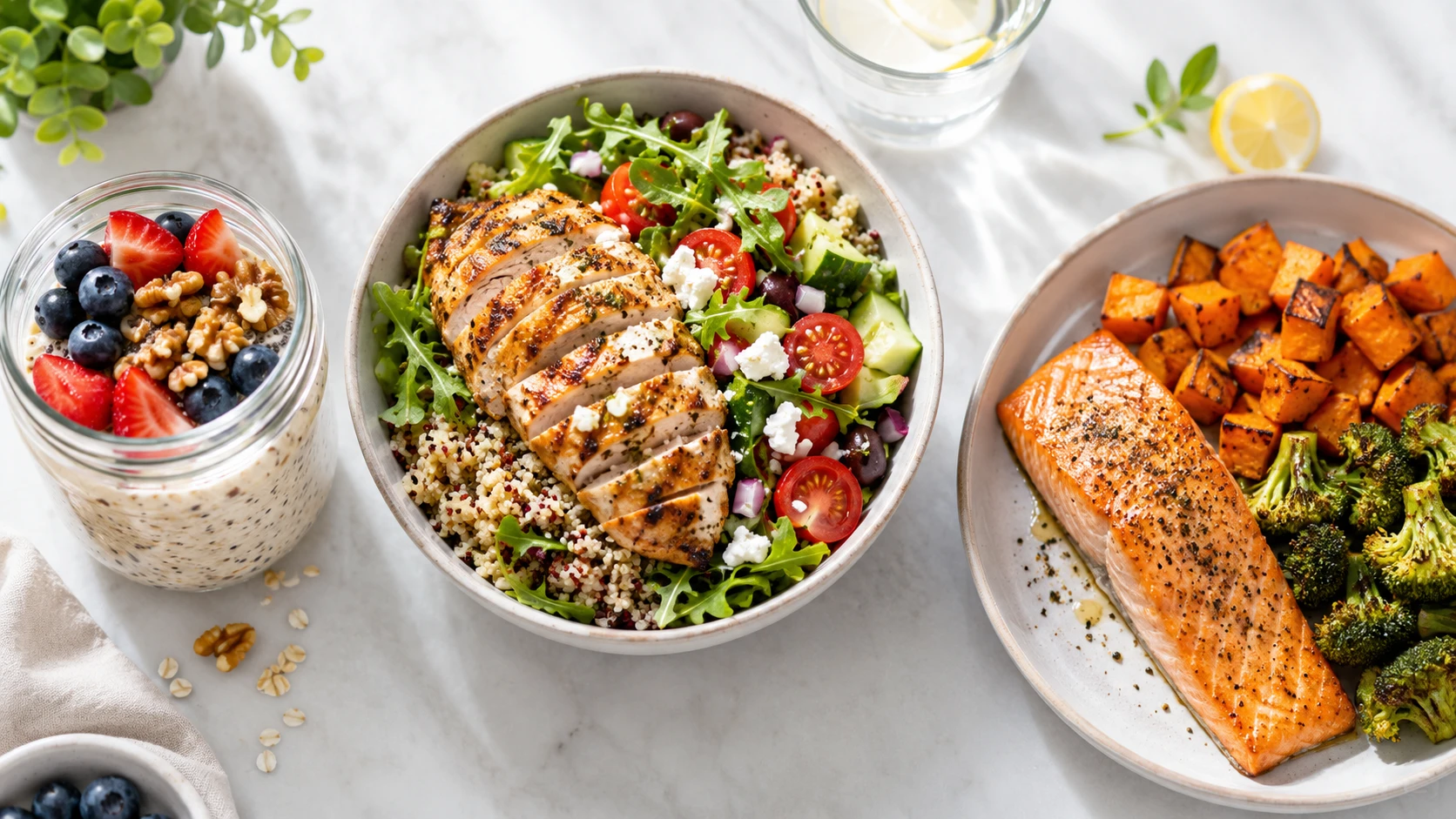
- Breakfast: overnight oats with berries, chia seeds, and walnuts
- Morning snack: Greek yogurt with a drizzle of honey
- Lunch: grilled chicken breast, quinoa salad with greens, olive-oil dressing
- Afternoon snack: veggie sticks with hummus
- Dinner: baked salmon, roasted sweet potatoes, steamed broccoli
- Hydration: aim for eight cups of water
For a fuller daily routine with options by goal, see our daily diet plan.
Frequently Asked Questions
What are the healthiest foods to eat every day?
Fresh vegetables, fruits, lean proteins, healthy fats, and whole grains.
Can I eat the same healthy foods daily?
Yes — just rotate your fruits and vegetables for full nutrient coverage.
Is it okay to eat eggs daily?
For most people, yes — moderation is key.
What does a balanced meal look like?
Some protein, fiber-rich carbs, healthy fats, and colorful vegetables.
What are five top foods for long-term health?
Berries, leafy greens, salmon, nuts, and whole grains.
Final Thoughts
Healthy eating is a lifestyle, not a one-time effort. It’s about respecting your body and choosing mostly whole foods. You’ll slip sometimes — that’s normal. Health is about the long haul. One good choice at a time, stacked day after day, builds a stronger, healthier you.
Sources & References
1. Afshin A, et al. Health effects of dietary risks in 195 countries. The Lancet. 2019;393(10184):1958–1972.
→ pubmed.ncbi.nlm.nih.gov/30954305
2. USDA FoodData Central. Nutrient profiles for whole foods.
3. Harvard T.H. Chan. Vegetables and Fruits. The Nutrition Source.
4. WHO. Increasing fruit and vegetable consumption to reduce the risk of noncommunicable diseases.
→ who.int