
Table of Contents
ToggleHigh-Protein Foods List: The Best Animal and Plant-Based Sources
Key takeaways
- Protein keeps you full, supports muscle, and helps with healthy weight management.
- Top animal sources include chicken breast, eggs, Greek yogurt, fish, and lean beef..
- Top plant sources include lentils, chickpeas, tofu, edamame, beans, and quinoa.
- A simple guide for most people: include a palm-sized portion of protein at every meal.
Protein is the building block of a healthy body — it repairs muscle, supports your immune system, balances hormones, and keeps you feeling full long after you eat. Yet many people struggle to get enough, or aren’t sure which foods actually deliver.
This guide gives you a complete high-protein foods list — both animal and plant-based — with how much protein each provides and easy ways to fit more into your day. It pairs perfectly with our pillar on building a balanced diet.
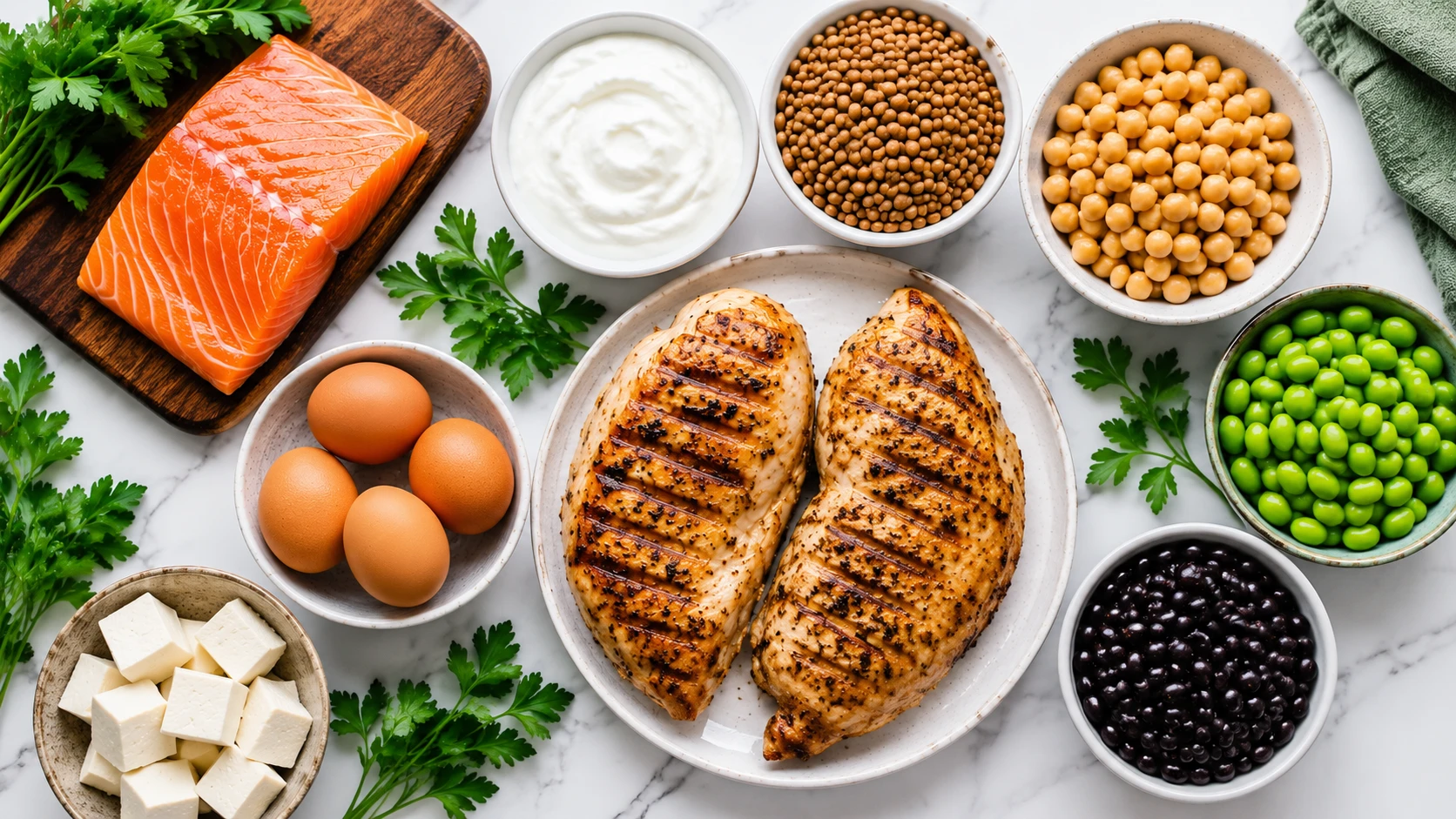
Why Protein Matters
Protein does far more than build muscle:
- Keeps you full — it’s the most satisfying macronutrient, which helps with weight control.
- Repairs and builds — muscles, skin, hair, and tissues all rely on it.
- Supports metabolism — your body burns more energy digesting protein than carbs or fat.
- Balances hormones — it provides amino acids your body needs for steady mood and energy. (More in our guide on happy hormones.)
How Much Protein Do You Need?
A common general guideline is about 0.36 grams of protein per pound of body weight (the basic daily reference for an average adult). People who are very active, building muscle, or older may need more. Rather than obsessing over numbers, a simple, practical approach works for most: include a palm-sized portion of protein at each meal. Individual needs vary, so check with a doctor or dietitian for personalized targets.
High-Protein Animal Foods
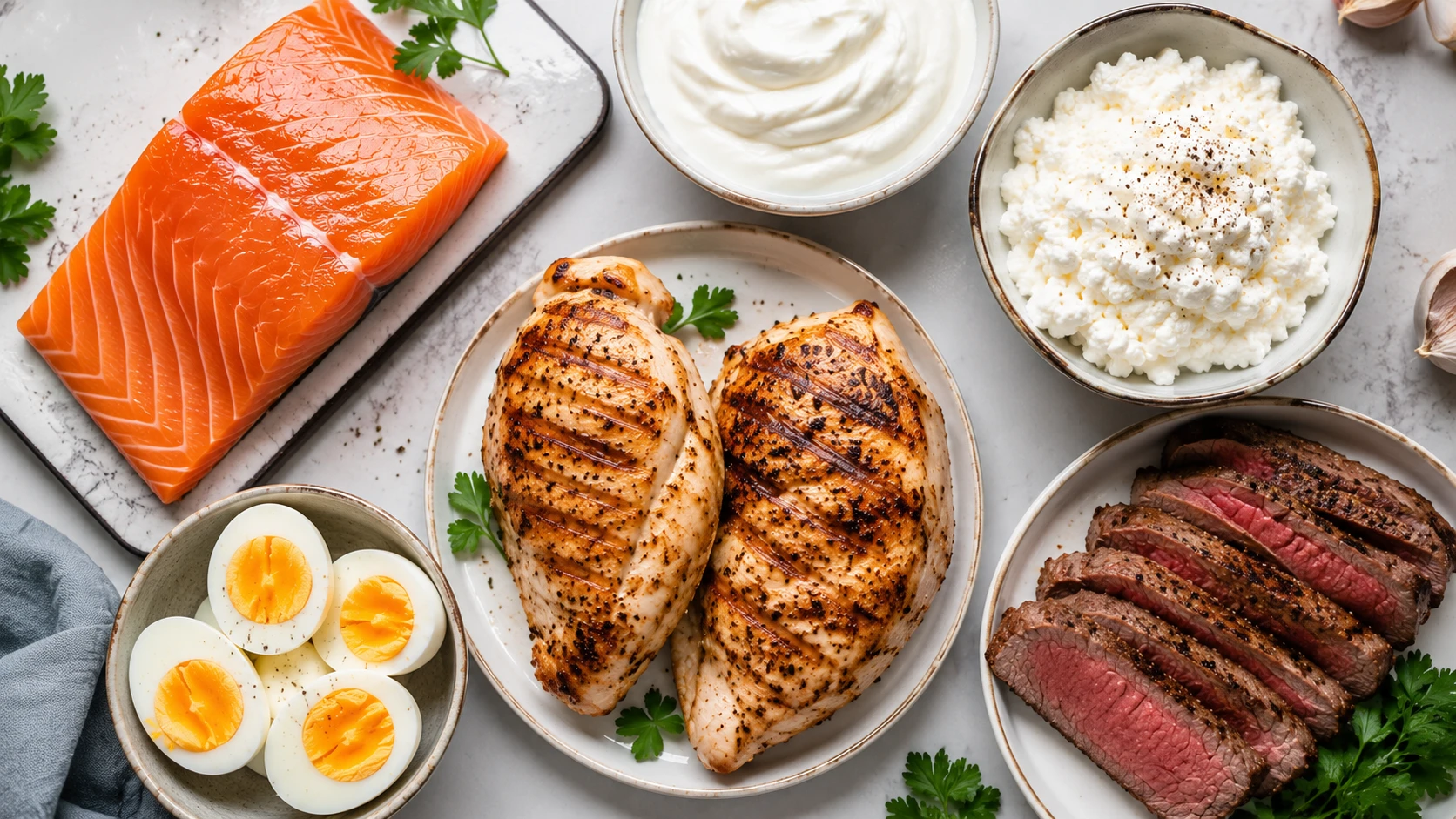
| Food | Serving | Protein (approx.) |
|---|---|---|
| Chicken breast | 3 oz | 26 g |
| Turkey breast | 3 oz | 25 g |
| Lean beef | 3 oz | 24 g |
| Salmon | 3 oz | 22 g |
| Tuna | 3 oz | 20 g |
| Greek yogurt (nonfat) | 1 cup | 17 g |
| Cottage cheese | 1/2 cup | 12 g |
| Egg | 1 large | 6 g |
High-Protein Plant Foods
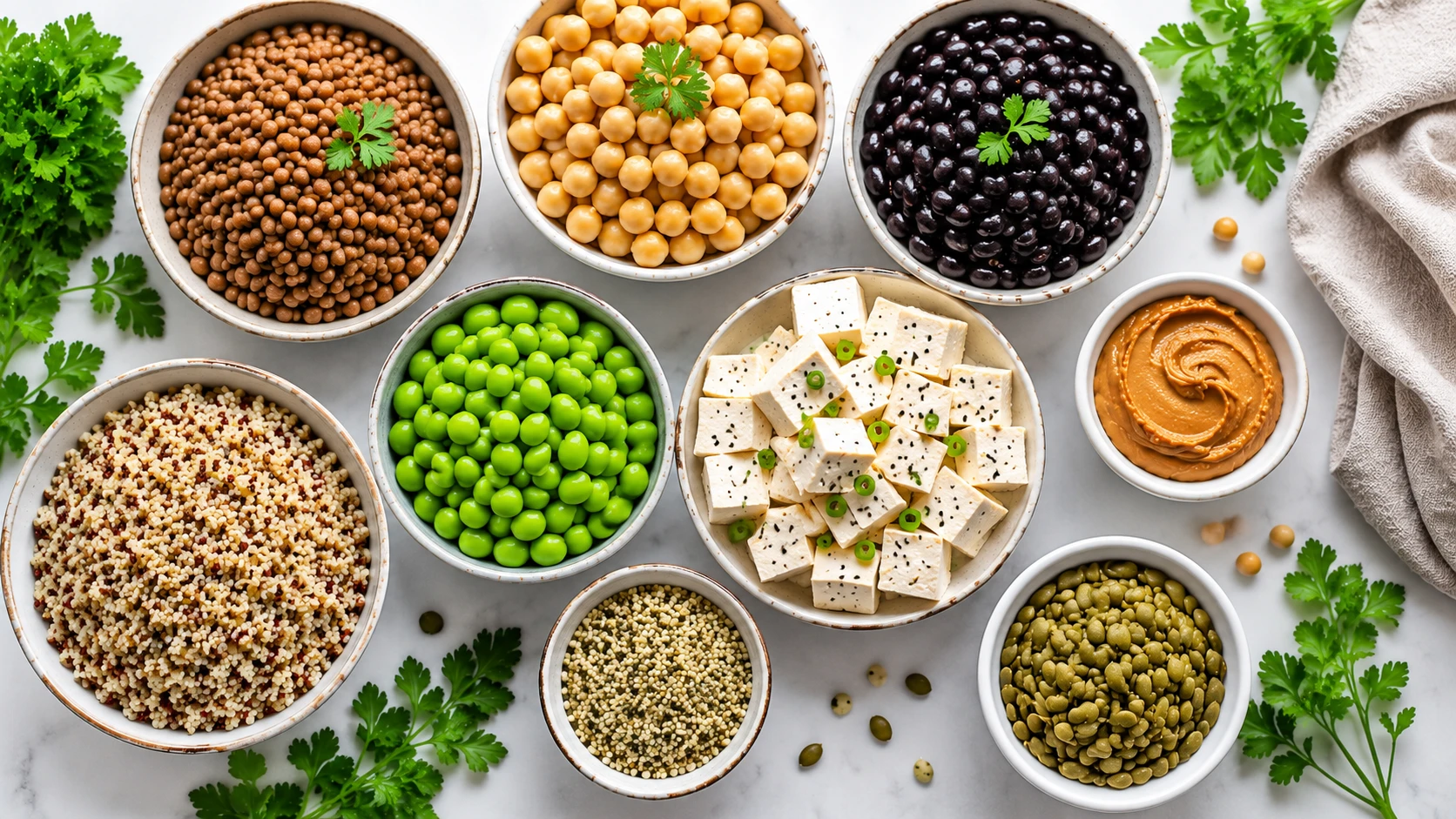
Plant proteins are often “incomplete” on their own, so vegetarians and vegans benefit from eating a variety across the day (for example, beans with rice) to cover all essential amino acids.
Easy Ways to Eat More Protein
- Start the day with eggs or Greek yogurt instead of just toast or cereal.
- Add beans, chickpeas, or grilled chicken to salads and bowls.
- Keep high-protein snacks handy — a boiled egg, edamame, or a handful of nuts.
- Stir hemp seeds or peanut butter into oatmeal and smoothies.
- Build each plate around a protein first, then add vegetables and grains.
For a full daily structure, see our daily diet plan and what foods to eat every day.
High-Protein Foods for Weight Loss
Because protein is so filling, high-protein foods are a popular tool for weight management — they reduce cravings and help preserve muscle while losing fat. This is exactly why structured high-protein plans like the Dukan Diet can produce fast early results. Lean proteins (chicken, fish, egg whites, nonfat dairy, legumes) are your best friends here.
Common Protein Myths
- “More protein always means more muscle.” Muscle needs protein and strength training — see our at-home workout moves.
- “Plant protein is useless.” Plenty of plant foods are protein-rich; variety covers the gaps.
- “You must eat protein right after a workout.” Total daily protein matters more than perfect timing.
Frequently Asked Questions
What food has the most protein?
Lean meats, poultry, fish, and eggs are top animal sources; lentils, edamame, and beans lead the plant sources.
How can vegetarians get enough protein?
By combining lentils, beans, tofu, edamame, quinoa, nuts, and seeds throughout the day.
Is too much protein bad?
For most healthy people, moderate-to-high protein is fine, but those with kidney issues should consult a doctor.
What’s a simple way to know if I’m eating enough?
Aim for a palm-sized protein portion at each meal as a quick, practical guide.
Final Thoughts
Getting enough protein is one of the simplest, highest-impact upgrades you can make to your diet. Mix animal and plant sources, spread protein across your meals, and pair it with vegetables and whole grains for a balanced plate. Do that consistently, and you’ll feel fuller, stronger, and more energized.
Sources & References
- USDA FoodData Central. Protein content of foods. — fdc.nal.usda.gov
- NIH. Protein and Amino Acids. Office of Dietary Supplements. — ods.od.nih.gov
- Harvard T.H. Chan School of Public Health. The Nutrition Source — Protein. — hsph.harvard.edu
- Leidy HJ, et al. The role of protein in weight loss and maintenance. Am J Clin Nutr. 2015. — pubmed.ncbi.nlm.nih.gov/25926512